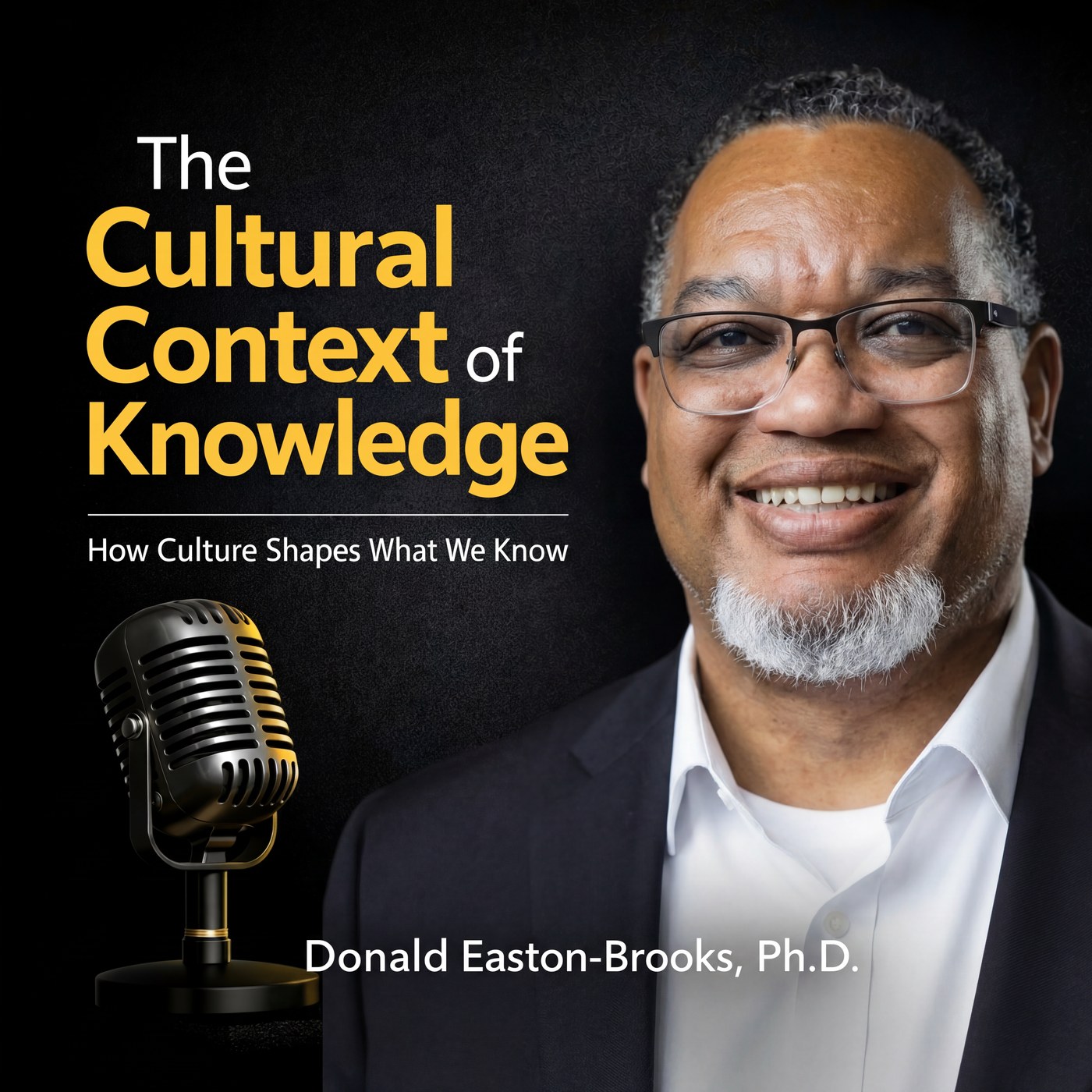
In this week’s episode I make a claim that does a lot of heavy lifting in a short runtime: integration happened to the students; it did not happen to the teaching profession. The podcast had about twelve minutes to hold that idea. The written version can give it the room it deserves.
This essay goes further in two places the episode had to compress. It spells out the history of Black teacher displacement after Brown v. Board — what actually happened, at what scale, to whom. And it walks through the ethnic matching research more carefully than a spoken script allows, naming the studies, the effect sizes, and the question at the center of the field: what is actually doing the work?
The argument is the same one the episode makes. I think it reads even more clearly on the page.
What was lost, at scale
The clean story about Brown v. Board of Education is that a 1954 Supreme Court decision ended school segregation and the country got on with the work of equality. The unclean story — the one historians of U.S. education have been documenting for forty years — is that the decade after Brown was a decade of profound loss for one specific group: Black educators.
In 1954, the South had a large, credentialed, deeply experienced Black teaching corps. Segregated Black schools, precisely because they were cut off from the rest of the profession, had built their own traditions of rigor, mentorship, and community accountability. Vanessa Siddle Walker’s book Their Highest Potential, a history of Caswell County Training School in North Carolina, documents what a segregated Black school with strong leadership could do for its students — often with a fraction of the per-pupil funding of the nearby white schools. Michele Foster’s Black Teachers on Teaching preserves the voices of the educators themselves: what they understood about their students, how they thought about the work, what they carried.
These teachers were not replaceable. Many held advanced degrees at rates that exceeded their white counterparts. They lived in the communities they served. They had been trained, in many cases, at historically Black colleges with specific intellectual traditions of education — traditions that ran through W.E.B. DuBois, Carter G. Woodson, Anna Julia Cooper, and Charles H. Thompson. They had institutional memory. They had generational relationships with the families of their students.
And in the decade after Brown, many of them were pushed out.
The scale is hard to state with a single number — different historians use different methods — but the most careful recent accounting, in Leslie T. Fenwick’s 2022 book Jim Crow’s Pink Slip, puts the loss at roughly 38,000 Black teachers and administrators between 1954 and 1965. Black schools were closed rather than integrated. Black principals were demoted to assistant roles or not hired at all. Licensure decisions that had been local were centralized in ways that produced predictable disparate outcomes. The National Education Association commissioned studies during the same period trying to quantify what was happening; the resulting reports, and the later historical work by Linda Darling-Hammond, Fenwick, Foster, and others, describe a profession being hollowed out in plain view.
What the country told itself was that this was incidental. What actually happened was that a generation of Black professional knowledge, built over a century, was treated as surplus to a project of integration that was supposed to be on its behalf.
The episode had time for the headline. The argument needed the detail.
The research, named
From that loss, a research question grew. If integration removed Black teachers from the profession at scale, did students lose something measurable? For decades the answer the field gave was fuzzy — the data were too coarse, the methods too weak to isolate teacher effects from everything else going on in a child’s education. Starting in the early 2000s, that changed.
The line of work most often cited is Seth Gershenson’s research program with Cassandra Hart, Joshua Hyman, Constance Lindsay, and Nicholas Papageorge. Their 2017 working paper, later published as “The Long-Run Impacts of Same-Race Teachers” in the American Economic Journal: Economic Policy in 2022, used a large North Carolina administrative dataset and found that Black students who had at least one Black teacher in grades three through five were meaningfully more likely to graduate from high school and to enroll in college.
The average effect on the probability of dropping out — the figure the episode cited — lands in the single digits. But the effect is not evenly distributed. For the subgroup most at risk of dropping out to begin with — low-income Black boys — the estimated effect of even a single Black teacher between roughly ages eight and eleven is dramatically larger, with published estimates putting the reduction at well over thirty percent. Let me put that in plain terms. For the student furthest from the graduation finish line, one Black teacher in one elementary school year changes the odds of finishing high school by a third.
Earlier work in the Tennessee STAR dataset — a randomized class-size experiment that doubled as one of the cleanest natural experiments in education research — produced smaller but directionally consistent effects: same-race teacher pairings in kindergarten through third grade raised reading and math scores by several percentile points, and the effects persisted into later grades. More recent extensions have found similar patterns for Latino students with Latino teachers. Studies of teacher expectations — from the same research team, and others — have shown that non-Black teachers hold lower expectations of Black students than Black teachers do of the same students, even after controlling for the students’ academic performance. That expectation gap is not abstract. It shapes referrals to gifted programs, suspension decisions, and the hundreds of small judgments that accumulate into a transcript.
The work that anchors this research into a broader theoretical frame is the commentary I co-authored with Jemimah Young and Devin Williams — Still Searching for a Match. The central move of that piece is to take ethnic matching seriously as a justice-centered project rather than a narrow quantitative one. The numbers are real. They are also, in a sense, the simplest part of the story.
The mechanism question
Here is the question inside the question. Why does a same-race teacher improve outcomes? The research community has proposed several answers, and — honestly — no consensus has fully settled.
One hypothesis is role-modeling. Seeing an adult who looks like you do the intellectual work of teaching opens possibilities a child had not previously considered. The college-enrollment finding in particular is consistent with this mechanism.
A second hypothesis is expectation effects. Non-Black teachers, in the expectation studies, systematically underestimated what Black students were capable of — and students, over years, calibrate to the expectations around them.
A third hypothesis is culturally responsive pedagogy. A teacher who shares a student’s cultural context is more likely to draw on that context in instruction — to recognize a student’s funds of knowledge, in Luis Moll’s phrase, as assets rather than deficits. This is not automatic. Teachers of color who have been trained in frameworks that require them to suppress their own cultural knowledge may not produce the effect. But the capacity is there in a way it is not for a teacher without the shared context.
A fourth hypothesis, less prominent in the quantitative literature but central in the ethnographic work, is identity safety. A child whose teacher does not read them as a problem, does not flinch at their name, does not treat their home language as an obstacle, spends fewer cognitive cycles managing threat and more cycles learning. That is not soft framing. It is the same cognitive-load argument I made in last week’s essay about ethnic studies — what I call the misrecognition tax — applied to the relationship with the adult in the room.
The truth is that all four mechanisms are probably operating, in different proportions, in different classrooms. The quantitative research has not been able to separate them cleanly. What it has been able to do — and has done — is rule out the hypothesis that the effect does not exist. That hypothesis is no longer defensible. The effect is robust across datasets, across methods, across research teams.
What remains contested is the mechanism. That is the right kind of contest for a field to be having.
The fair critiques
A few critiques of the ethnic-matching research deserve space, because they sharpen the field rather than diminish it.
The first is methodological. Causal inference in education is hard. The students who end up in a classroom with a Black teacher are not a random sample — parents select, principals assign, school-choice policies redistribute. The best studies use quasi-experimental designs that exploit assignment variation the families did not control, but no single study settles the matter. The strength of the finding is that it has replicated across many designs, not that any one of them is airtight.
The second critique is that an emphasis on matching can obscure the deeper problem. If the policy response is simply “hire more teachers of color,” the field risks ignoring the question of why non-matched classrooms are sites of disadvantage in the first place. Gloria Ladson-Billings and others have argued, rightly, that the project is not only demographic but pedagogical. Culturally responsive teaching can be learned by any teacher. The matching finding is a proxy for something that matching alone does not guarantee.
A third critique, sometimes raised by scholars working across borders and across linguistic communities, is that the “ethnic matching” frame can import U.S. racial categories into conversations where they fit awkwardly. Indigenous education, multilingual classrooms, immigrant communities that do not map onto the four-field framework — the construct has to stretch to hold these, and sometimes it tears.
None of these critiques refutes the finding. They draw the shape of what a serious response to it has to look like.
Why the research has not translated
I have been through the research carefully here because the question the episode ended on is the one I want this essay to press: if we have known this for twenty years, why does the U.S. teaching force still look the way it does?
The answer is not a shortage of candidates. It is a series of narrowings along the pathway into the profession.
Teacher-preparation programs enroll student bodies that are disproportionately white relative to the K–12 student body their graduates will serve. The licensure exams used in most states — Praxis most prominently — have well-documented disparate passing rates that are not explained by teaching ability but that filter candidates of color out of the pathway before they reach a classroom. Starting teacher salaries, which have been eroding in real terms for two decades, often cannot compete with the other careers available to a college graduate of color carrying the kind of student debt that first-generation students disproportionately take on.
And once teachers of color reach classrooms, they leave them faster. Not because of some deficit of commitment — the research on teacher retention is clear on this — but because they are disproportionately placed in the hardest-to-staff schools, given the thinnest support, and asked to carry what researchers sometimes call the invisible tax: the mentoring, translating, committee work, and face-of-diversity labor that never appears in the job description but accumulates into the reason they leave.
The pathway narrows at every step, and the narrowings compound. The result is a teaching force that is about eighty percent white, facing a K–12 student body that is a little over half non-white. That is not a gap that closes by waiting. It closes by deciding to close it.
What this leaves us with
The single sentence I would send home with a reader, if I had to pick one, is the one I used in the episode: integration happened to the students. It did not happen to the teaching profession. The country told itself a story about Brown v. Board that was only half true, and the half it left out was the half that shaped the classrooms the rest of us grew up in.
It is not too late to tell the other half. Some of the work is scholarship — recovering the history of the educators who were pushed out, treating their loss as a real loss rather than an acceptable cost. Some of it is policy — building recruitment and retention pathways that actually reach the communities a school serves, and support structures that recognize the invisible tax for what it is. Some of it is classroom practice — the culturally responsive pedagogy that every teacher can learn.
All of it rests on a premise that the research has made hard to deny: the teacher is part of the curriculum. When we decide who stands in front of our students, we are deciding what those students will understand, tacitly, about who is authorized to know. We have been making that decision carelessly for seventy years. We can make it on purpose now.
In the next episode, we turn to what happens when that authorization starts to get challenged — when states pass laws telling teachers which histories they can and cannot tell. The backlash is the natural next chapter of a season about knowledge and power.
DEB