Podcast · Solo Narration
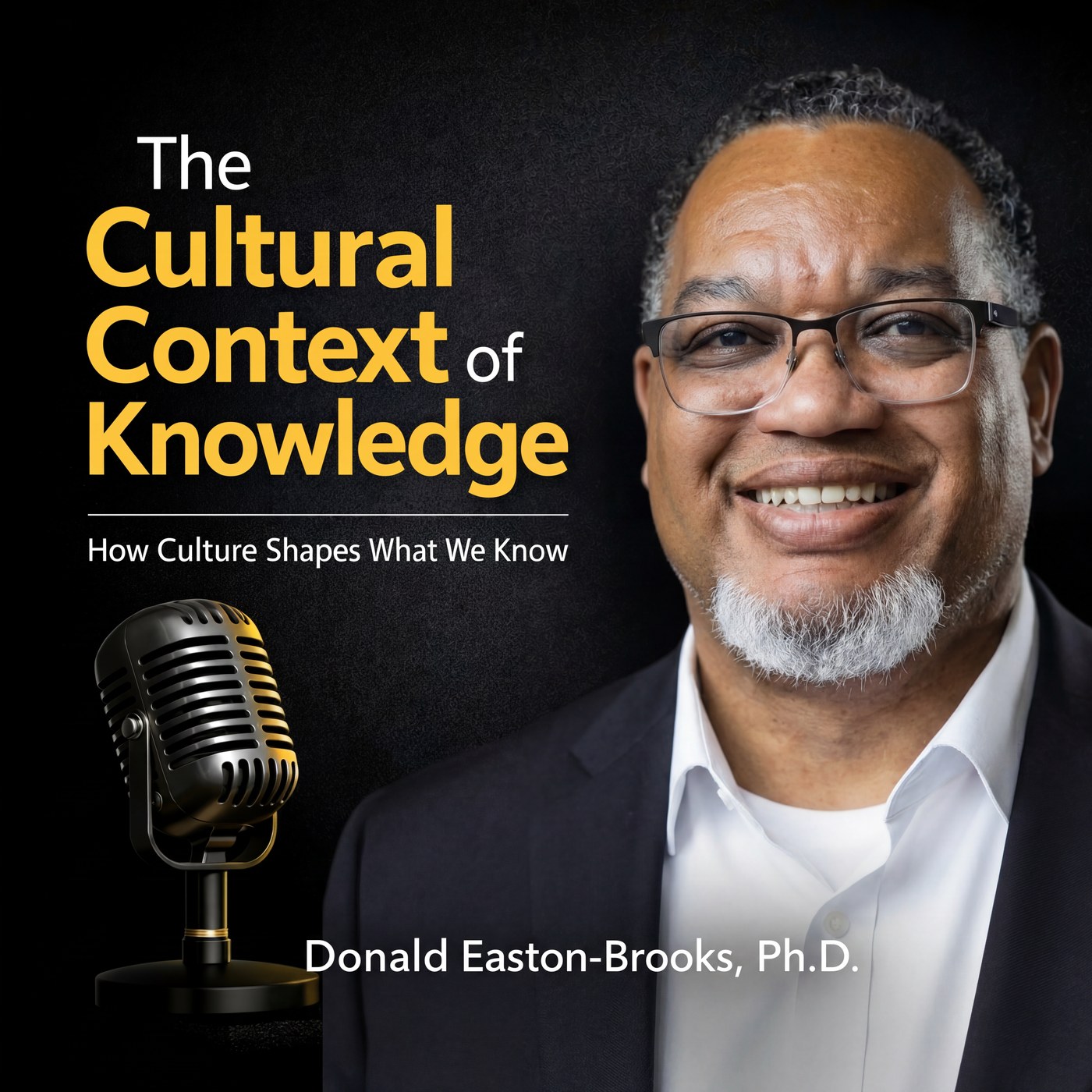
The Cultural
Context
of Knowledge.
Knowledge is never neutral.
A solo-narrated essay series hosted by Dr. Donald Easton-Brooks, an award-winning scholar of educational equity, author of Ethnic Matching, and a dean with three decades of higher-education leadership. The show explores how culture shapes what we know, and what that means for classrooms, curricula, and the institutions that serve every learner.
For educators, students, school leaders, researchers, and anyone asking how knowledge, power, culture, and schooling shape what we call learning.
New to the show? Start here.
Begin with Season 2, Episode 1: Knowledge, Power, and the U.S. Demographic Pivot. This episode introduces the central question of the series: Who decides what counts as knowledge, and what happens when schools fail to change with the students they serve?
“Knowledge is not just what we have learned — it is what our culture has decided is worth learning, and from whom.”
From the show · Season 2
Two seasons, one inquiry.
All episodesSeason · 11 episodes · Complete
Foundations
What culture does to learning — and what learning, as productive struggle, asks of us in return.
Enter the seasonSeason · 8 episodes · Complete
Knowledge & Power
How institutions decide what counts — and what happens when newly legitimate knowledge meets the backlash.
Enter the seasonSeason · 1 episode · In progress
The History of an Idea
A chronological history of ethnic matching — and the tradition of Black educators that existed, and was dismantled, long before the term did.
Enter the seasonRecent essays
Full archive- 20
S3 · E1 · Jun 3, 2026
Before the Term: What the Field Looked Like Before 'Ethnic Matching' Had a NameSeason 3 opens before the research. Long before any economist isolated a same-race-teacher effect in a state dataset, Black educators in the segregated South had deliberately built the conditions that…
Latest
- 19
S2 · E8 · May 13, 2026
How State Standards Get Written: Curriculum as CompromiseState standards are the most concentrated place in U.S. public education where decisions about other people's children get made by people who do not have to live with the consequences. This episode na…
- 18
S2 · E7 · May 6, 2026
AI as the New Gatekeeper: Whose Knowledge the Model Was Built to SeeThe newest gatekeeper between learners and what they are trying to know is a model that fills silence with fluent invention. This episode names confabulation as a patterned harm — the model is most co…
- 17
S2 · E6 · Apr 30, 2026
The Hidden Curriculum: When Researchers Chose the Word ViolenceSome words are not just names — they are arguments. This episode examines how researchers came to use "violence" to describe certain institutional practices in education, and what that conceptual shif…
- 16
S2 · E5 · Apr 24, 2026
The Backlash: Why Newly Legitimate Knowledge Gets TargetedMarginalized knowledge does not stay marginalized, and it does not stay curricular either. This episode names the three-move cycle — dismissal, absorption, restriction — that dominant knowledge system…
Companion writing
The argument, in print.
Episodes are arguments written for the ear. The companions are the same arguments on the page — short essays that travel alongside the audio, with notes and references for the reader who wants to follow the trail further.
All companionsStay close to the show
New episodes monthly. Show notes, references, and the next question — to your inbox.
The archive
All episodes
- 020
S3 · E1 · Jun 3, 2026
Before the Term: What the Field Looked Like Before 'Ethnic Matching' Had a NameSeason 3 opens before the research. Long before any economist isolated a same-race-teacher effect in a state dataset, Black educators in the segregated South had deliberately built the conditions that effect would eventually measure. A history of ethnic matching as a practice that existed, was theorized, and was dismantled, before it ever had a name.
Jun 3, 2026
Beyond the podcast
Work with Dr. Easton-Brooks.
Keynote speaking, institutional advising, and equity-in-education consulting — for schools, districts, universities, and philanthropic partners.