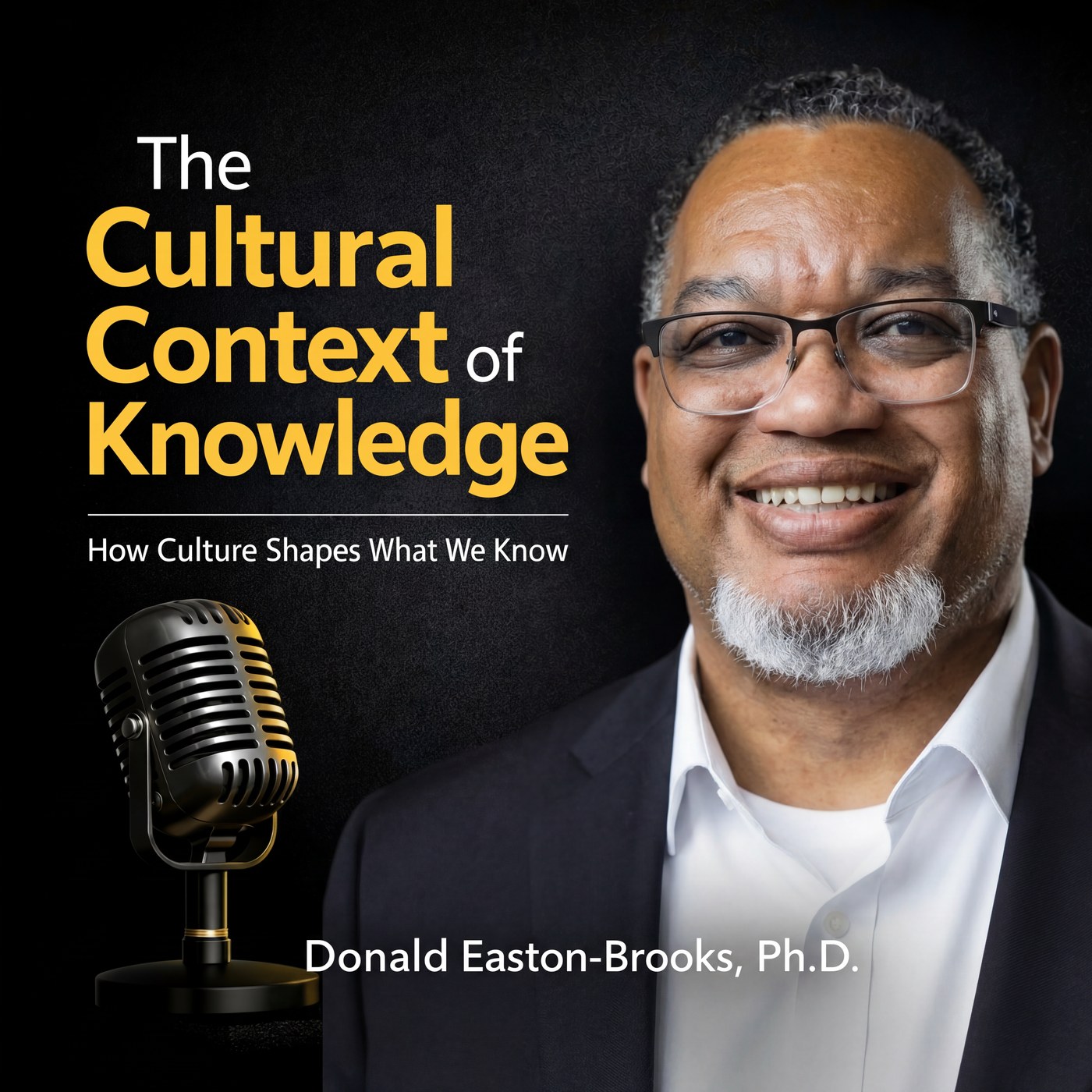
This first episode is unusual because it isn’t really one voice. It’s two AI voices, generated by NotebookLM, interpreting a written piece on learning, struggle, and the cultural context of knowledge. The episode opens the show by demonstrating something rather than explaining it. Listeners hear what happens when a tool reorganizes a human argument into a conversation, quick, energetic, occasionally brilliant, and missing exactly the things that matter most.
That gap is the point.
The source material argues that learning is a struggle, and that genuine learning is sequential. Definitions and functions before comparison. Comparison before abstraction. The piece uses Bloom’s taxonomy as a scaffold, with a kindergartner learning to write the letter A as the through line. The struggle is not failure. The struggle is the brain reorganizing itself to hold something new. AI tools, the piece warns, often invite learners to skip that reorganization. People begin at the abstract level, write me an essay, give me a finished policy proposal, without first building the foundation that lets them evaluate what AI gives back.
The NotebookLM hosts capture a great deal of this. They translate the argument efficiently. They use the kindergartner example. They name the danger of starting at the top of Bloom’s. They introduce the concept of grand and mini narratives, and they get to the point that AI output is only as strong as the user’s conceptual and cultural framework.
Listen carefully and you can also hear what they soften.
The original argument insists that knowledge is culturally situated, that what counts as good knowledge depends on context, perspective, power, and whose narratives are included. The NotebookLM voices nod toward this and then pull the energy back into prompt-engineering tips. The result is a useful summary that misses the spine of the work. This is exactly what the source warns about. AI compresses time, and sometimes it compresses development.
For a learner, the conceptual takeaway is simple. Learning has a sequence. Foundations are load-bearing. Skipping them feels efficient until the moment the work needs evaluation, and at that moment the cost arrives all at once.
For an educator, the instructional takeaway is also simple, though it asks more of you. Design AI use that reinforces foundational learning. Require cultural-context checks. Ask learners to define before they compare, and compare before they create. Treat AI as scaffold rather than substitute. The tools will keep getting better at producing fluent prose. They are not getting better at noticing what is missing.
Where this sits in the season
This episode pairs with Season 1, Episode 2, which delivers the same source material in Don’s voice. Listening to them in order is the cleanest way to hear what AI translation does and doesn’t carry. The content is the same. The argument is the same. What shifts is the texture, the pauses, the cultural weight, the way the kindergartner example lands as a teaching move rather than a clever illustration.
The two episodes together set up the rest of the season. If learning is sequential and culturally situated, then every later question in the season, about STEM neutrality, about what counts as knowledge, about the seven-phase study process, has to be examined through both lenses at once.
A few questions worth sitting with
What did the NotebookLM voices make easy to hear? What did they make harder to hear?
Where in your own learning have you started at the abstract level, asking for a finished product before you had the conceptual frame to evaluate it?
When you treat AI output as neutral, whose narrative are you smuggling into the work?
One thing to try this week
Pick a topic you are studying, teaching, or writing about. Before you ask any AI tool a single question, write three sentences in plain language that define the topic, name a clear example, and name a clear non-example. Then go to the AI with a prompt that uses those three sentences as your frame. Notice what changes in the response. Notice what changes in your ability to evaluate it.
That small move, definition before generation, is the entire argument of this episode in practice.