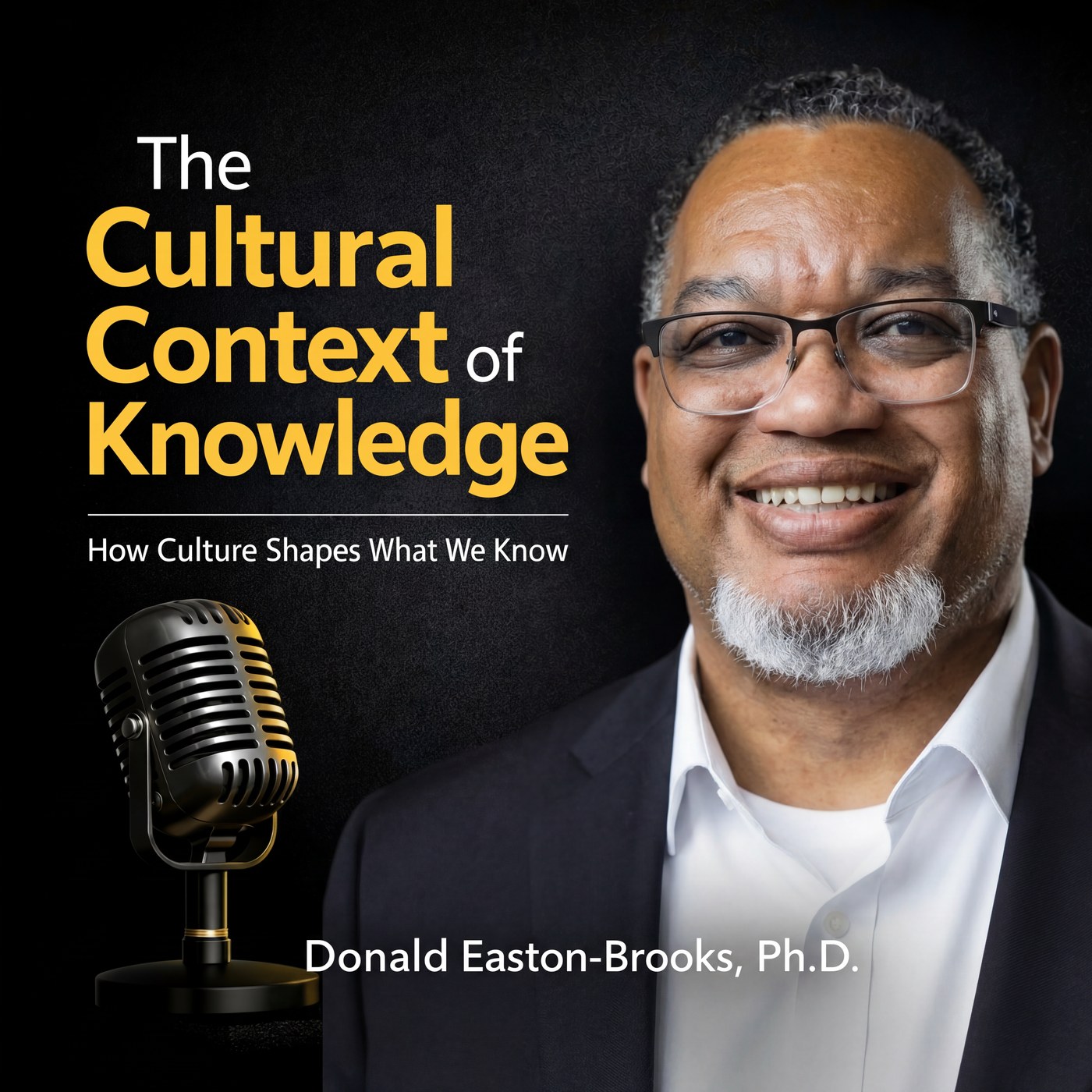
Season 2 opens with a fact that almost no one writes on a whiteboard. The U.S. school system is operating with a 20th-century structure inside a 21st-century classroom. The structure was built, its curriculum, its standards, its measures of rigor, its definitions of intelligence, for a population that no longer exists in the form the system was calibrated to serve. The episode names this directly. The classroom has changed. Higher education has changed. The framework has not yet caught up.
The numbers in the episode are the spine. Children under eighteen in the United States are now majority non-white, with non-Hispanic white children making up roughly 47 to 48 percent of that population. In public K–12 schools, white students represent about 44 percent of enrollment, which means students of color collectively make up the majority. Higher education has shifted as well. Women now earn roughly 59 percent of all bachelor’s degrees in the United States, and among adults ages 25 to 34, about 47 percent of women hold a bachelor’s degree compared to about 37 percent of men. Before the 1970s, the pattern was reversed. Higher education was overwhelmingly male.
Episode 1 then asks the question that organizes the rest of the season. When the population changes, does the system evolve, or does it reinforce inequity?
Why this is a knowledge question, not a demographics question
The episode’s most important move is not to read out the numbers. It is to argue that demographic change is also a knowledge-framework change. Knowledge inside schools is curated. It is selected, sequenced, framed, and evaluated. Curriculum committees decide what is foundational. State boards define proficiency. Universities define what counts as rigorous research. Accreditation agencies define quality. None of those are neutral filters. They are exercises of power. Power does not just suppress knowledge. Power organizes it.
Once you see that, the demographic pivot stops being a head-count story and becomes a knowledge-legitimacy story. When men dominated universities, the knowledge framework reflected male experience, the questions that got asked, the methods that got rewarded, the citations that got compounded into authority. When women gained access in the 1970s, the framework expanded. Research broadened. Disciplines evolved. Demographic change reshaped intellectual production.
Now we are in another shift. The episode is careful here. The question is not whether math is still math. The question is how math is framed, what examples are used, what contexts are assumed, what forms of expression are validated, what kinds of reasoning get rewarded as rigor versus dismissed as informal.
The hidden curriculum, named
This is also the episode where the show names the hidden curriculum directly. Students learn content. They also learn how to perform knowledge, when to speak, how to format an answer, what counts as a confident response, what tone wins approval. Students whose backgrounds align with dominant norms get labeled naturally gifted. Students whose knowledge is rooted in community experience may get labeled underprepared. The episode argues that this is not an intelligence gap. It is an alignment gap. If we ignore demographic change, we risk mistaking misalignment for incapacity, confusing conformity with competence, and protecting tradition under the name of rigor.
That last sentence is the one to return to when the season’s harder episodes get controversial. Equity does not mean lowering the bar. It means ensuring the bar is not invisibly calibrated for one historical group.
What institutions can actually do
Episode 1 ends with a short list of moves. Make standards transparent, teach students how the knowledge framework operates, rather than treating it as the air they breathe. Expand the framework without abandoning rigor. Redefine rigor as intellectual depth, not rigid form. Align leadership decisions with demographic reality. None of these moves require lowering standards. All of them require seeing the standards clearly enough to ask who they were built for.
This is institutional legitimacy, not political correctness. When educational systems fail to evolve with the populations they serve, they lose trust. When they evolve intentionally, knowledge deepens.
Where this sits in the season
Season 2 is asking how knowledge becomes powerful. Episode 1 is the diagnosis, the demographic pivot has already happened, and the system has not yet pivoted with it. Episode 2 examines how knowledge becomes legitimate in the first place, the gatekeeping mechanisms of peer review, citation, accreditation, and now algorithms. Later episodes take up who gets to teach, why some knowledge is marginalized, what happens during a backlash, what the hidden curriculum looks like under stress, how curriculum becomes compromise, and what changes when AI joins the gatekeeping system. Episode 1 is the door into all of it.
A few questions worth sitting with
Where in the institution you know best, your school, your district, your campus, your workplace, has the population changed faster than the structure?
What does rigor mean where you work? Who calibrated it? What forms of expression does it reward, and which does it ignore?
If you imagine the hidden curriculum at your school, what is it teaching students to perform? What does that performance reward, and what does it cost?
One thing to try this week
Pick one standard, rubric, or expectation in the work you do, an assignment, a job description, a measure of “professionalism.” Read it slowly and ask one question. Whose lived experience would naturally produce this performance, and whose would have to translate to produce it? You don’t need to redesign the standard yet. The first move is being able to see the calibration. The rest of the season will keep handing you tools to expand the framework without losing the rigor.