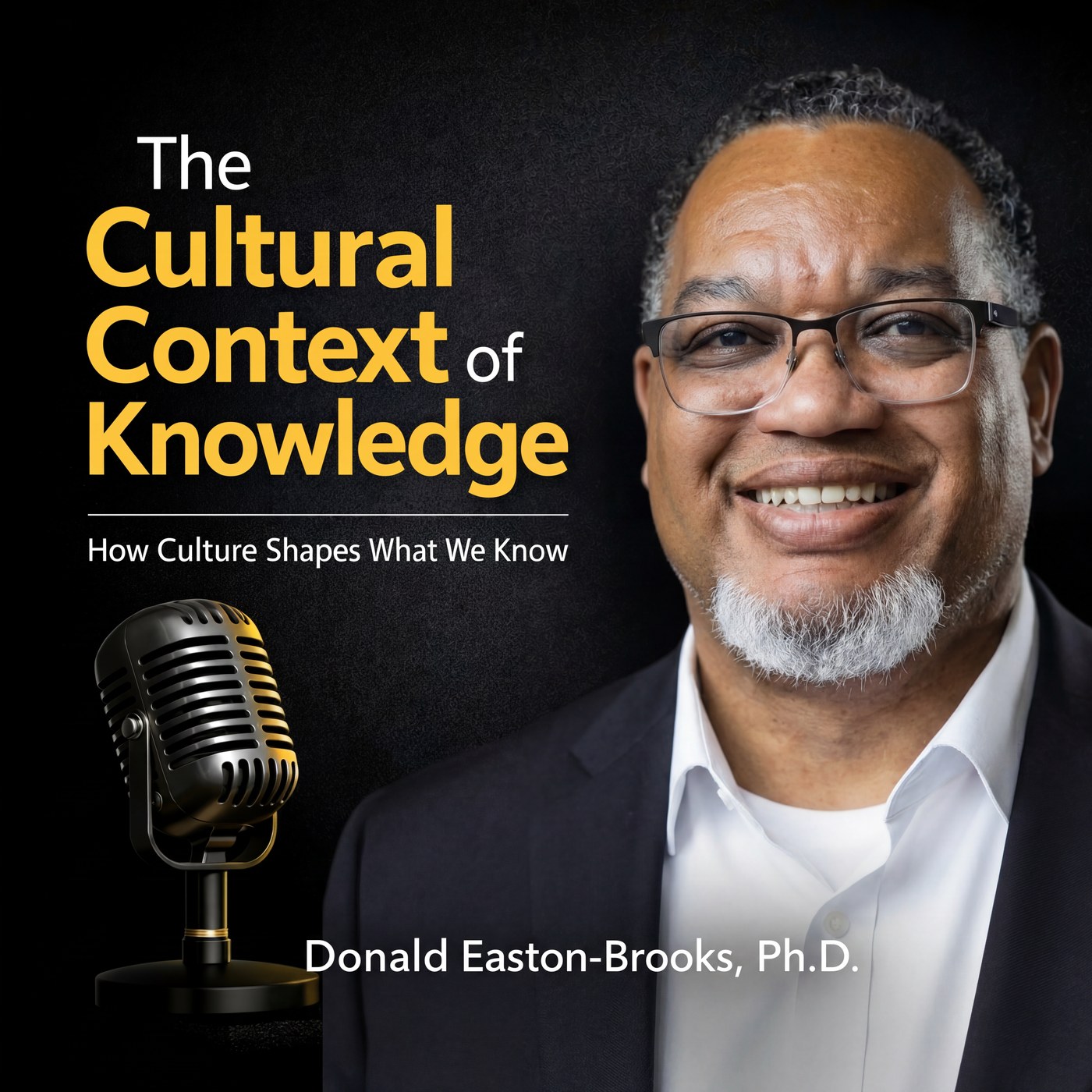
The Schools Built Against Them
Listen to The Cultural Context of Knowledge on one of your favorite podcast players.
- 00:00Open — four scenes, one truth the families already knew
- 03:00Part 1: What the families already knew
- 07:30The Black South and double taxation
- 10:00Mexican families and the sorting behind the kindness
- 12:00Asian families on the coast, and the politics of the door
- 14:00Part 2: What the building was built to take
- 17:00Part 3: The teacher the community sent back
- 20:30Part 4: The tax that compounds
- 23:00Do this this week + close
“They knew a building could teach reading and still teach shame. Access was not the same as recognition.
Read the full transcript
Between 1890 and 1920, families across Black, Native, Mexican, Chinese, and Japanese communities learned a similar lesson in different places. The public school did not mean the same thing for every child.
For a Black child in the rural South, it could mean a separate school with fewer dollars and a shorter term. For a Hopi child, removal from family and language and the people who had the right to teach her who she was. For a Mexican child in the Southwest, a separate building the officials called language help. For Chinese and Japanese children on the coast, schooling that turned on exclusion, segregation, and the standing of the nation behind the child.
Different structures. The same years.
And across those years, families knew something before courts, researchers, and public officials named it. They knew a school could offer a desk and still misread the child. They knew a building could teach reading and still teach shame. They knew access was not the same as recognition.
So they built beside the public system. That is where this episode begins. Not with what these communities lacked, but with what they knew: that children needed more than a place to sit. They needed teachers who understood their language, history, family, and memory, adults who could recognize them before correcting them, an education that did not ask them to become less of themselves before learning could begin.
Welcome to The Cultural Context of Knowledge. I am Donald Easton-Brooks. This is Season 3: The Inheritance Tax: Where Ethnic Matching Became. This episode is called The Schools Built Against Them, and there is so much in it to honor that I am giving it to you in two parts. This is part one, and it does two things: it shows you the schools the country built against these children, and it names the schools these communities built for themselves in answer. Part two will turn to what those community schools were protecting their children from, the teacher who stood in the doorway, and the price that gives this season its name. So settle in. We begin with what the families already knew.
In a Hopi village called Oraibi, the elders already knew what the government school in the canyon was for. They had seen the children come back changed, or not come back at all. So in 1894 they refused to hand their children over, and the country answered by sending cavalry, arresting nineteen of their leaders, and shipping them to a prison in San Francisco Bay, Alcatraz, for nine months, through the planting season and the harvest. The country did not send soldiers over a simple disagreement about school. It sent them over who had the authority to decide what Hopi children would learn, and who had the right to teach them.
In Alamosa, Colorado, a father, Francisco Maestas, understood the assignment for what it was the moment it came. Francisco worked the railroad, so he knew the crossing better than anyone, and he knew his ten-year-old, Miguel, would have to walk seven blocks across active tracks to reach the school the district set aside for the Mexican children, while there was a school closer to home. The district said the separation was about English. Francisco knew better, because his son spoke English, and so did many of the others sent across those tracks. In 1913 he asked to enroll Miguel in the nearer school, and when the district refused, he took it to court, and in 1914 a judge agreed with him and called the separation what it was.
And on the coast, Asian families already knew the country might treat their children according to who was thought to be standing behind them. Chinese families had been to court and won, years before, and it had not been enough, because the city found a way to separate their children anyway, and there was little diplomatic weight to push back. Japanese families saw a different outcome. When the city moved to push their children out too, Japan made it a matter of international protest, President Theodore Roosevelt stepped in, and the order was undone. The lesson underneath it was that their children's place in the schoolhouse could depend on the politics of the moment. And so these families kept building their own schools beside the public one, language schools held after the school day was done, so the next generation would have at least one place where they began as someone whole.
Four scenes, one truth under all of them. None of these families needed a court ruling or a study to tell them what was happening to their children. They already knew. By these years the country had stopped forbidding the schoolhouse and learned instead to build one, and to decide, child by child, who it would teach and who it would only manage. So I will hold these communities together, because they were living it at once, and let the laws and the court cases come in where they belong, late, as the country's confirmation of what the families already understood.
You just heard four families in four corners of the country, each already certain what the public school would do. Now watch how that one knowledge showed up differently in each community, because the shape of the harm was never the same twice, and the proof is in the difference.
Begin with the Black families of the rural South, because the historian Dr. James Anderson, author of The Education of Blacks in the South, 1860 to 1935, spent a career documenting what they did, and what he found was not a story of gifts handed down. It was a story of a people who built their own.
When freedom came, the demand for schooling that had been hidden in the clearings came into the open as a movement, and it was led by the formerly enslaved themselves. They did not wait to be given schools. They built them, they staffed them with their own, and they founded the colleges we still know by name, to train the teachers and ministers the country had tried to make impossible. For a few years the country helped, through the Freedmen's Bureau, and that help mattered. But Anderson is careful, and so am I. The engine was the community. The schools rose because the people raised them.
Then the country withdrew the help and wrote the separation back into law, and in time the Supreme Court gave that separation its blessing and its lie, the phrase separate but equal. The families had already done the math. They watched their tax dollars build the white school and skip theirs, so they paid twice, once to the county that gave them nothing, and once to themselves, in land and labor and pooled wages, to build what the county would not. In one Alabama county in 1909, the white schools received twenty dollars per child. The Black schools received sixty-seven cents. Anderson gave the practice a name, double taxation, but the families did not need the name. They were the ones paying it. The country did not build those schools. The community did, and then was billed for the privilege.
For Mexican families across the Southwest, the same arithmetic took a different form. Their children's separation rarely came as a state race law. It came through local custom and a school board's quiet discretion, defended as a matter of language even when, as the Maestas family proved in that Alamosa courtroom, the children already spoke English. The pretext was language. They could see what it really was.
For Asian families on the coast, the law could agree with them and still defeat them. The lesson of the Tape case and the 1906 order was that the same separation could stand or fall depending on the diplomatic weight behind a community, and not on the children. A community with a powerful government to speak for it abroad could see an order reversed; a community without that leverage could win in a courtroom and watch the city build around the victory. The point was never that one community deserved school more than another. It was that the country's door swung on geopolitics the children had no part in, so these families built a second school of their own, beyond the reach of that door.
And the Native nations carried the clearest knowledge of all, because the country was taking their children's bodies, not just their lessons. By 1900, three out of every four Native children were enrolled in these schools, many carried hundreds of miles from home, and the man who built the model said its purpose out loud: kill the Indian, save the man. The Hopi elders refused, and the country proved them right by sending soldiers. You do not imprison elders over a school you believe is harmless.
Hold them together, because this is the heart of it. A Black family paying twice. A Mexican family reading the sorting behind the kindness. Asian families watching the door swing on politics and not on their children. A Hopi elder refusing, and going to prison for it. Not one of them was waiting to be told. The knowledge came first. The proof came later, and it came from the country itself.
Now we turn from what the families knew to what they did about it, and I am going to take my time, because these are people who deserve to be named.
So far I have said the communities built their own schools, as if building were a thing a whole people did at once. It was not. It was done by particular people, with names, who decided the education their children deserved would not arrive on its own, and so they made it. I want to name them, community by community, because naming them is the point. The school did not appear. Someone built it, often at a cost we should not look away from.
Start with the Black church, because for a people whose literacy had been a crime, the church was the first schoolhouse they controlled. The African Methodist Episcopal Church turned its sanctuaries into classrooms across the South, and by 1880 the AME alone was running more than two thousand schools, teaching some hundred and fifty-five thousand students. The minister and his wife were often the teachers. The congregation raised the money. While the segregated public schools were starved on purpose, the church fed its own children letters out of the collection plate.
Out of that soil grew institutions that still stand. The Institute for Colored Youth in Pennsylvania, from 1837. Wilberforce in Ohio, from 1856. Paul Quinn and Wiley in Texas, in the eighteen-seventies. The first of what we now call the Historically Black Colleges and Universities, built so a people could train its own teachers, its own ministers, its own doctors, rather than wait on a country that had no intention of training them.
And a generation of Black women turned that conviction into schools of their own, often beginning with almost nothing. In North Carolina, Charlotte Hawkins Brown started the Palmer Memorial Institute in 1902 in a building that had been a blacksmith shed, and built it into a school of national reputation. In Washington, Nannie Helen Burroughs opened her National Training School for Women and Girls in 1909 with thirty-one students, in an eight-room farmhouse the community bought for sixty-five hundred dollars, almost every cent of it raised from Black donors, because Burroughs insisted the school never depend on white money. She called her course of study the three B's, the Bible, the bath, and the broom, and she taught Black girls that they could be self-supporting and beholden to no one. These women were not waiting for the county to value their children. They built the places that already did.
And the building did not stop at the schoolhouse door. When Booker T. Washington and Julius Rosenwald began a fund to put up rural schools for Black children, starting with a handful in Alabama in 1912 and growing into the thousands, the money came with a condition, and the condition told the truth. The grant had to be matched. So Black families across the South held penny drives, deeded their own land, and laid the bricks with their own hands to earn a building their taxes should already have paid for. More than five thousand of those schools rose this way. The country called it philanthropy. The families knew it was the double tax, poured into a foundation.
On the Texas border, the builders were often women who were journalists and organizers as much as teachers. In Laredo, in the same years the public schools were sorting Mexican children aside, Jovita Idar and Leonor Villegas de Magnon, along with Maria Villarreal and Maria Renteria, ran escuelitas, little schools, taught in Spanish, where a child read in the language of her own home and learned her own history instead of a version that demeaned it. Idar had taught in one of those segregated, underfunded Mexican schools herself, and what she saw there sent her to lead an organization of Mexican women devoted to bringing free schooling to Mexican children. Villegas de Magnon opened the first bilingual kindergarten in Laredo, in her own home, so the youngest children would never have to choose between their two languages.
Some of these little schools grew into lasting institutions. In Mercedes, a teacher remembered only as Profesor Cuellar taught some sixty children out of a single house. And in Hebbronville, in 1897, a group of Mexican families, the Martinez, the Barreras, the Penas, and others, pooled their own money to found El Colegio Altamirano, named for a Mexican educator, and hired a headmaster to run it. They built a curriculum so serious it ran six to eight years, taught in both languages, and turned out graduates who walked into the public high schools ahead of the children who had been allowed in all along. The escuelita was not a consolation. In Hebbronville it was the better school, and the families had built it themselves.
Among the nations of what is now Oklahoma, the building was done at the scale of a government, with a sovereignty the other communities did not have, and the country would punish them for using it. The Choctaw Nation passed its own public school act in 1842 and paid, out of its own treasury, for a whole system of academies, Spencer for boys in 1844, Armstrong in 1845, Wheelock and New Hope and Goodland, with places set aside by law for the orphaned children of the Nation, so the most vulnerable were not left behind. A Choctaw man named Joseph Dukes, born in Mississippi in 1811, helped set the Choctaw language itself into a grammar and a dictionary, working alongside the missionary Cyrus Byington, so that the language could be written, taught, and kept. The keeping of the language was Choctaw work, done by a Choctaw hand.
The Cherokee Nation did the same on a grand scale. In 1846 it set aside eighty thousand dollars of its own funds, and in 1851, near its capital at Tahlequah, it opened a Male Seminary and a Female Seminary, with tuition and room and board paid entirely by the Nation. That was free higher education before almost anywhere else in the country offered such a thing, and the Cherokee built it for themselves. The Chickasaw built Bloomfield and Wapanucka in 1852, because, as one account put it, the Chickasaw people knew literacy was crucial to the survival of the Nation. The Seminole built the Mekasukey Academy in 1891, a three-story school with electricity and indoor plumbing, for Seminole and Afro-Seminole boys. These were national institutions, built and governed by the people they served. And that is exactly why the country moved against them. In 1898, the federal Curtis Act stripped these nations of control of their own schools and pulled them under federal hands. The sovereignty that built the schools was the thing the country took, because the schools had proved the sovereignty was real.
And on the coast and across the ocean in Hawaii, Asian families built a second school system of their own, beside a public system that kept shutting them out. After San Francisco opened a segregated Chinese school in 1885, the Chinese community, organized through its family and district associations, built its own heritage schools to keep the language and the learning alive on its own terms. Japanese families did the same, and the record of it is remarkable. The first Japanese language school opened in Kohala, Hawaii, in 1893. The Seattle Japanese language school opened in 1902, the oldest on the mainland, beginning with a class of four. In San Francisco, the Kinmon Gakuen, the Golden Gate Institute, opened in 1911 with a hundred and thirty-three children, many of them barred from the city's schools. And by 1920 a federal count found a hundred and sixty-three Japanese language schools in Hawaii alone, teaching nearly twenty thousand children, almost every Japanese child of school age on the islands.
Korean families, newly arrived and few in number, built schools with a fierce purpose, because their homeland was under occupation and the school was where the nation would survive. Through the Korean National Association, founded in 1909, they opened schools in Hawaii and California that taught Korean grammar, Korean history, and Korean arts alongside the lessons of the school day, so that children born far from a country under another flag's control would still know whose children they were. For all of these families, the second school was not a luxury. It was how a people refused to disappear.
Hear what all of them share. A church turning its pews into desks. A woman in a blacksmith shed, another in a farmhouse bought with her people's pennies. Border women teaching in their own front rooms, and a town that built a colegio finer than the school that shut its children out. Sovereign nations spending their own treasuries on academies, and a Choctaw man saving his own language by hand. Families pooling tuition for a language school after the school day was done, so the next generation would know who they were. None of them were waiting for the school the country would not give. They were the school.
That is part one. Take these builders with you, and say their names. When you come back, in part two, we will turn to what their schools were protecting their children from, and to the teacher who stood in the doorway. I am Donald Easton-Brooks. This is The Inheritance Tax. I will see you in part two.
This is part two of The Schools Built Against Them. If you have not heard part one, you may want to start there, but here is where we are. In part one, we stood with the families who already knew what the public school would do to their children, and with the people who built schools of their own in answer, the church classrooms and the escuelitas, the sovereign nations' academies and the language schools on the coast. They were the school. Now we turn to what those schools were holding their children against, and to the person who stood in the doorway between the child and the harm.
What were those community schools protecting children from? Name the pattern, because it ran through every one of these buildings the country ran. The official school in this era was built to take the thing we named last season, the cost a child pays to translate herself before she is allowed to learn, and to take it on purpose.
It took a Mexican child's Spanish and handed back shame, teaching her that the language her grandmother gave her was a debt to pay down before she could belong. It took a Native child's language and kinship and named them a danger, punishing her for her own words, treating her name and her hair and her bond to the land as things to scrub away. This is the banking model Paulo Freire wrote about in Pedagogy of the Oppressed, the child made into an empty account, emptied first of her own. It taught a Black child her worth through a secondhand book with a white child's name still inside, and a school year cut short for someone else's harvest. And it made an Asian child's belonging conditional, hers to keep only as long as the politics of the year allowed.
Four different thefts, one design: make the child pay for the very knowledge her community had spent generations protecting. The research did not discover this. It arrived, generations late, at a door the families had been standing behind the whole time. And in the meantime, the families answered the theft the only way they could, by putting someone in the doorway.
So the families did what they had always done. If the country would build a school to take the child apart, the community would put a teacher in front of that child who would keep her whole. This is the figure we followed all of last episode, and in this era the community did not lose her. The community sent her back in, into the walls of a system built against her child.
Let me show you what that looked like in one life, because it is the whole season in one life. Lucy Craft Laney was born to formerly enslaved parents in Georgia and was in the first class to graduate Atlanta University. She could have gone anywhere. She went back, into a county that handed Black children a shack and called it a school, and in the eighteen-eighties she opened a school of her own that began in a single borrowed room. Under her hand it became the Haines Institute, and by 1912 it held nine hundred children and thirty-four teachers, with the first kindergarten and the first nurse training for Black women in Augusta. In her classroom the child did not have to translate herself into someone the wider world would accept. With her presence alone she lowered the cost the whole system was built to raise.
And here is the part I most want you to hold, because it is how the inheritance actually moves. A young teacher came to teach under Laney at Haines. Her name was Mary McLeod Bethune. She learned from Laney how a school could see a child whole, and she carried it to Florida and built a school of her own, the one that would become Bethune-Cookman. One builder made another. The teacher the community sent back did not only teach the children in her room. She taught the next teacher, who built the next school, who taught the next. That is the inheritance, moving hand to hand, against a current that was trying to wash it away.
In the Mexican school, where the mission was to remove the child's Spanish, a teacher who shared the child's language did something quietly defiant simply by understanding her completely. Jovita Idar knew that classroom from the inside, and what she saw there sent her to found a league of women to bring free schooling to Mexican children. Leonor Villegas de Magnon opened her bilingual kindergarten so the youngest would never have to choose between their two tongues. The recognition was the resistance, and these women made it a profession.
In the Asian communities, where the public door could be shut, or opened, or shut again by forces a child could not see, the families made sure there was a teacher the politics could not reach. The language schools that met after the public day was done held a teacher for whom the child's language and lineage were the starting point and not the thing to be corrected, a recognition that did not rise or fall with a treaty or an election.
And the boarding school is the hardest case, and I will not soften it, because softening it would be its own erasure. The country had designed the school to remove the child from the very people best able to teach her, the elders and relatives who carried the language and the ceremony and the deep reading of the land. And so the teaching that survived, survived in the cracks, in the children who whispered their own language after the lights went out and taught the younger ones the words the school was beating out of them. But remember what the nations had already built, before the country seized it. Joseph Dukes had set the Choctaw language into a book so it could be kept. The Cherokee had taught Latin and Greek in a seminary they paid for themselves. The teachers in those schools were the answer to the boarding school before the boarding school arrived. When the country took the elders away, it was trying to undo what these nations had already proved they could do for themselves.
A teacher who shares a child's world removes a cost the child would otherwise pay alone. And when the country made it nearly impossible for that teacher to stand in the classroom, the community found another way to put her there, in a college-trained daughter sent home, in a woman teaching from her own front room, in a nation paying its own teachers out of its own treasury, in an older child whispering in the dark. The figure we are tracing across this whole season was never a job title the field invented. It was a thing communities knew the value of, and protected by any means they had left, generations before anyone studied it.
There is a price under all of this, and the communities knew, in this era, that it was doing something new. It was compounding. I want to name that plainly, because it is the reason this season carries the name it does.
An inheritance tax is not paid once. It is levied at every transfer, every time something of value passes from one generation to the next. And the families understood that this was exactly what these schools were built to do. Not to take the knowledge from one child, but to tax its passage from each generation to the one behind it, so that what a community had built would reach the next child smaller, or damaged, or not at all.
The Black community built a movement for schooling and the colleges to sustain it, and watched the country spend thirty years draining the result. The Mexican community watched a generation taught to be ashamed of the language that had been the ground their parents stood on. The Asian communities watched the country make their children's belonging conditional on the standing of a faraway nation. And the Native nations paid the steepest cost of all, because the boarding school was engineered to break the transfer itself, to take the child at the age when the language and the ceremony pass down, and return her, if she returned, unable to give her own children what she had not been allowed to keep. That is the tax at its most complete. It does not only take from the child. It tries to make the child unable to give.
And here is what I most want you to carry out of this episode. Everything the research would eventually document about underfunded schools, about what segregation costs a child, about what a school does when it treats a child's culture as a deficit, these communities already knew, in their own lives, between 1890 and 1920. The family that paid the school tax twice. The child whispering her language after the lights went out. The Hopi elder on the prison island. The town that built a colegio finer than the school that shut its children out. The research did not discover this. It arrived, generations late, at a door the families had been standing behind the whole time.
And the cost did not end in 1920. It compounded forward, into the next generation, and into the century when the country would finally claim to fix it. That is where this season goes next.
This week, ask an older person something. Find someone a generation or two above you, in your own family or community, and ask where they went to school, and where their parents went, how far it was, and who paid for it. Let them be the source. You will likely hear something no textbook told you: a school the community built itself, a teacher everyone remembers by name. That is the knowledge this season is about, the kind that lives in people before it ever reaches a page. You are holding part of the inheritance.
Next week, we move into the years when the harm these schools were doing began to be named out loud, when one scholar would put words to what families had felt for decades, that the deepest damage was not whether the child could attend, but what the school taught the child to believe about herself. The families already knew it. The naming was just catching up.
One more thing before I go. I named many people in this episode, and still I left out more than I named. The full list of the schools and the builders, the ones I could fit and the ones I could not, is on the show's website, organized community by community. Go and read them. Say their names. Every one of them is part of the inheritance, and the list is meant to keep growing.
Thank you for listening to the Cultural Context of Knowledge. I am Donald Easton-Brooks. And this is The Inheritance Tax. See you next time.
This transcript comes from the production script. Wording may differ slightly from the episode as aired.
- 01Anderson, J. D. (1988). The Education of Blacks in the South, 1860–1935 · University of North Carolina Press.
- 02Freire, P. (1970). Pedagogy of the Oppressed · Herder and Herder.
- 03Donato, R., & Hanson, J. (2016). Maestas v. Shone (1914) and Mexican American School Desegregation in Colorado · in Journal of Latinos and Education.
- 04Ngai, M. M. (1995). Tape v. Hurley and the Struggle for Chinese American Education in San Francisco · in the historical record on Tape v. Hurley (1885).
- 05Adams, D. W. (2006). Education for Extinction: American Indians and the Boarding School Experience, 1875–1928 · University Press of Kansas.
Companion essay — The Schools Built Against Them
Get the notes, the references, and the reading list.
Join the email list and get the written companion and full reference list for every episode, plus the series reading list to start.
Continue the season
All episodes →
What the Communities Already Knew: Research, Method, and the Road Ahead (S3 E11)
The season finale looks underneath the whole argument, at the research itself. Dr. Easton-Brooks traces how the evidence for ethnic matching…
Beyond the Schoolhouse Door: Ethnic Matching in Higher Education (S3 E10)
For nine episodes this season, ethnic matching stayed inside the PK through 12 classroom. This one steps past the schoolhouse door into high…
From Research to Policy: Pathways That Worked, and Why Most Didn't (S3 E9)
The case for ethnic matching was built across three decades. This episode asks the question deferred just as long: what does it actually tak…